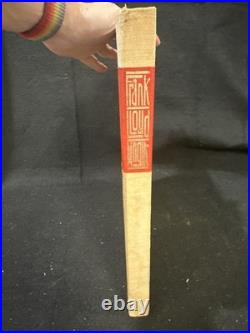
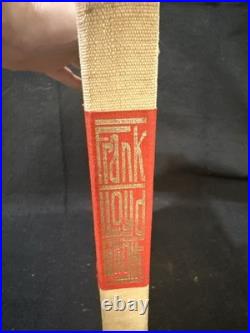
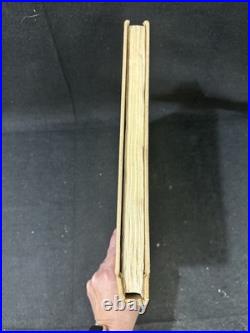
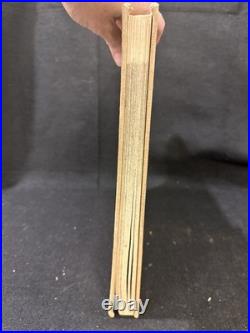
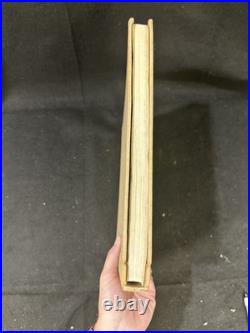
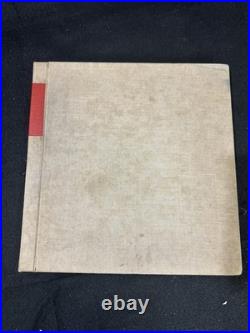
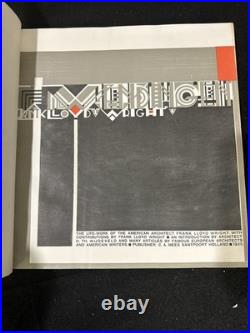
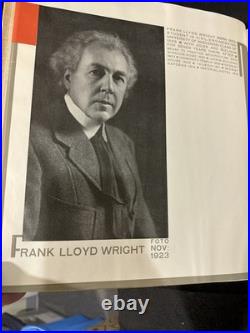
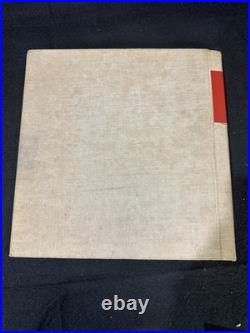
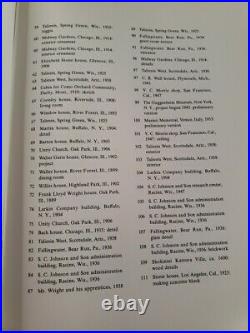
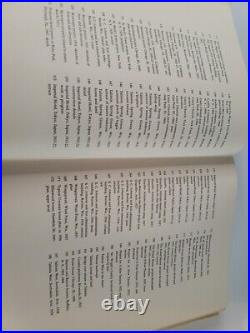
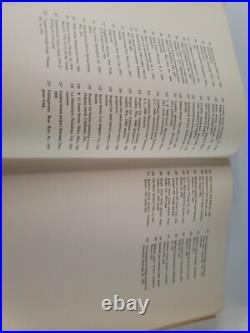
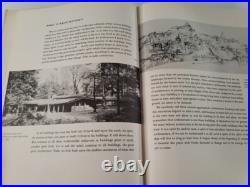
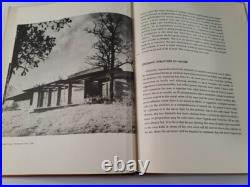
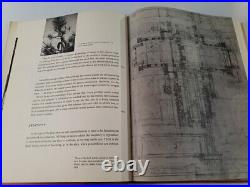
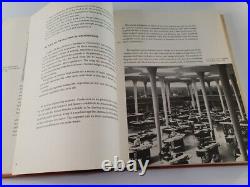
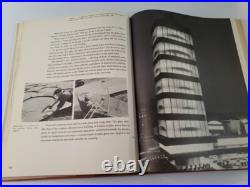
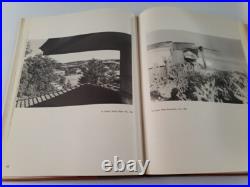
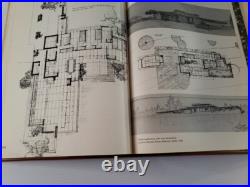
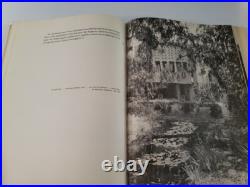
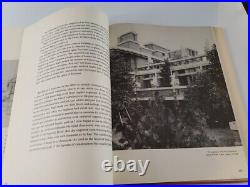
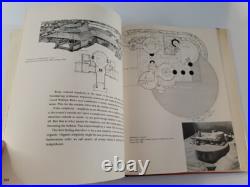
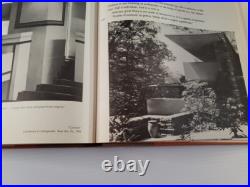
The Life-Work of American Architect Frank Lloyd Wright (1925) Wendigen 1st Ed. Is a rare and valuable collectible book focusing on the architectural genius of Frank Lloyd Wright. As a first edition, it holds historical significance and value for collectors and enthusiasts of architecture. The book likely includes detailed insights and visuals showcasing the work of this influential American architect, making it a sought-after item for those interested in the intricacies of modern design and architectural theory. The book is 13″x13.25″. Please look closely at the photos as they are part of the description. Thank you for looking.
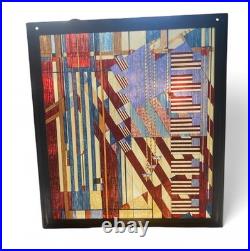
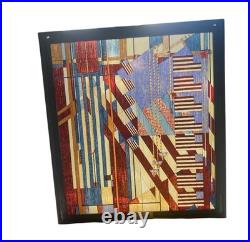
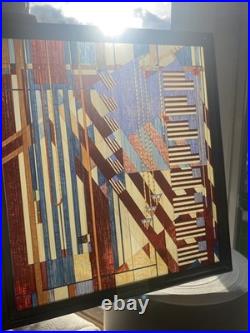
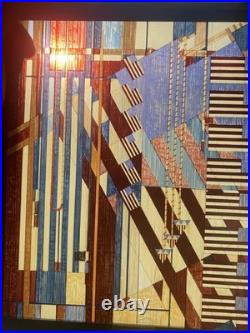
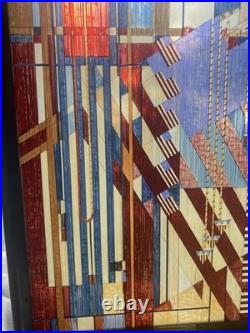
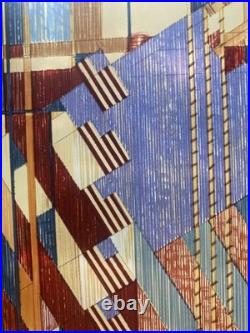
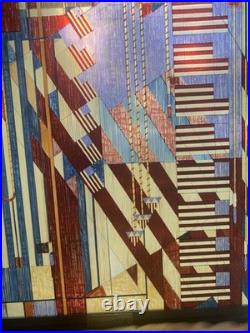
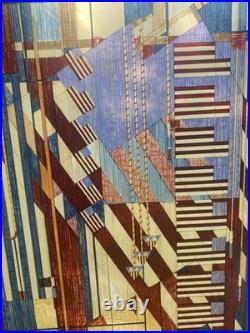
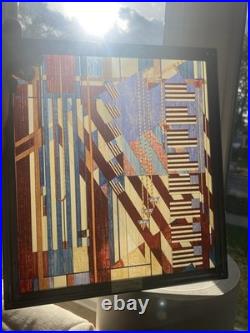
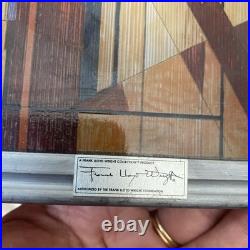
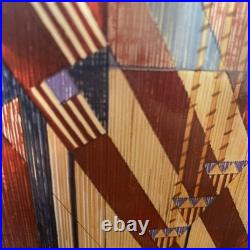
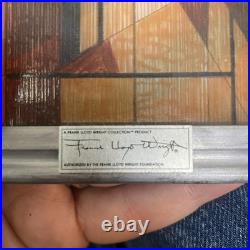
This is his most famous work, titled “July Fourth, ” and is an officially licensed collectible from the Frank Lloyd Wright Foundation. The original was one of 12 designs created for the cover of Liberty Magazine in 1927. Unfortunately, the design was so avant-garde that the magazine never published it. A metal sign plaque bearing the words “Frank Lloyd Wright” is located near the bottom center of the frame. The flat glass is painted with translucent enamel, creating a contoured surface, and the frame is made of metal. And because it’s handmade and fired, its color will never fade, even over the years. When held up to the light, this stained glass piece displays stunning beauty, elegant color, and presence. This piece has a hole at the top for hanging on a wall, making it versatile. [Dimensions] Width: Approximately 25.3cm 10″ x 22.5cm 9″.
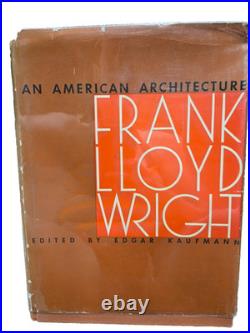
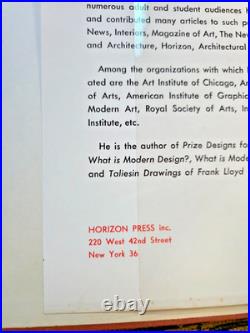
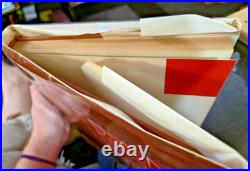
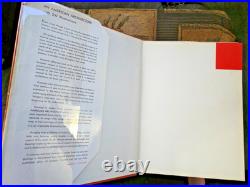
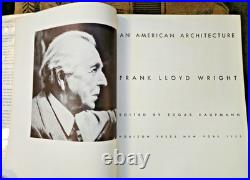
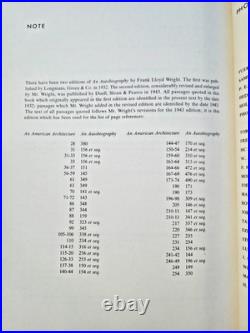
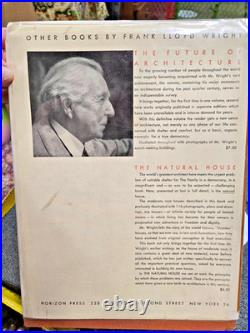
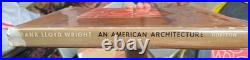
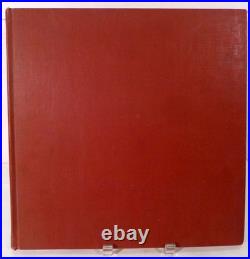
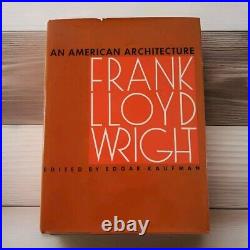
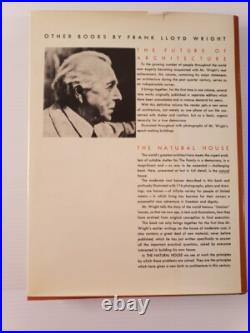
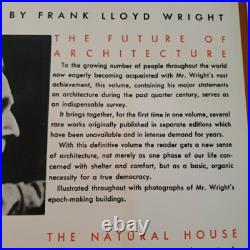
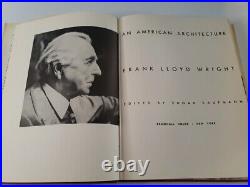
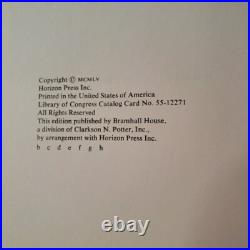
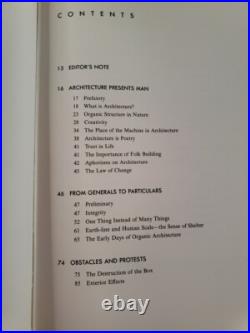
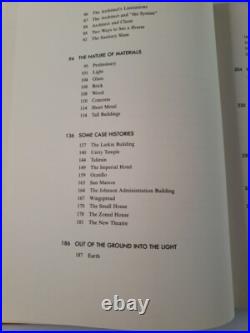
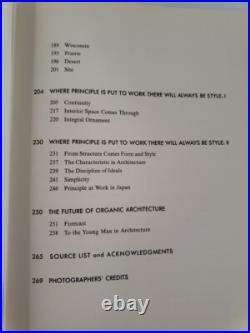
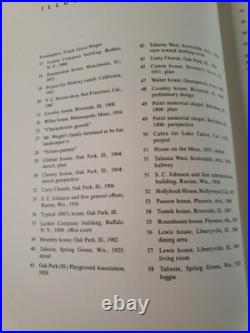
First edition hardcover of. Frank Lloyd Wright: An American Architecture. Edited by Edgar Kaufmann and published by Horizon Press in 1955. Profusely illustrated with photographs, sketches, and plans (269 pages). Book: Very Good – clean cloth boards with light shelf wear, tight binding, and clean pages showing only mild age toning. Not ex-library, no remainder marks, no inscriptions. Dust Jacket: Fair – original jacket present but price-clipped. Shows significant edge wear, creasing, and multiple small tears. Clear tape reinforcement along folds and top edge, with some peeling and wrinkling of the protective laminate. Despite wear, the jacket is complete and all text/design remain legible. A solid and desirable first edition – book Very Good, jacket Fair – suitable for collectors and enthusiasts of Frank Lloyd Wright.
Wendingen: The Life-Work Of The American Architect Frank Lloyd Wright. Author: Wright, Frank Lloyd Title: Wendingen: The Life-Work Of The American Architect Frank Lloyd Wright Publication: Santpoort: C. Mees, 1925 Edition: First combined edition. 34 x 33 cm. Seven issues in one, edited and typographically arranged by H. Wijdeveld, printed by Joh. Profusely illustrated: photographic plates and plans. Wijdeveld’s glowing tribute in his Introduction belies the stagnation in Wright’s commissions; he built almost nothing in the late 1920′s and early 1930′s, and many assumed his career was virtually ended. Interior contents clean and fresh, a very bright copy. Book label of W. Subject: Architecture, Design, Modern Art. Antiquarian Booksellers’ Association of America. International League of Antiquarian Booksellers. Members, specializing in General Antiquarian, Book Arts, Architecture, Literature, Travel and Natural History. This listing was created by Bibliopolis.
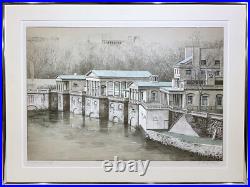
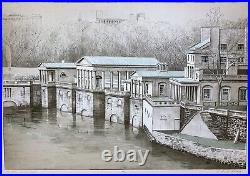
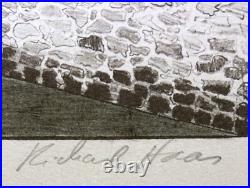
Original lithograph of the Fairmount Water Works building on the Schuylkill River in Philadelphia PA. American artist Richard Haas b. Biography from artnet: Richard Haas is a practitioner of the trompe l’oeil artistic style, a technique that uses realistic images in a way that tricks the eye into perceiving the painting in three dimensions. Haas has painted hundreds of murals that incorporate trompe l’oeil methods in the depiction of the architectural features of the building. He was born in Spring Greene but grew up in Milwaukee, WI. He graduated in 1959 from the University of Wisconsin-Milwaukee with a Bachelor in Art. He spent several years as an assistant professor at the University of Michigan before he moved to New York City in 1968. Haas spent 10 years teaching at Vermont’s Bennington College, splitting his time between the school and New York. Haas worked for many years as an Abstract painter who used traditional canvas media. He later developed an interest in drawing and etching the details of late 19th century and early 20th century New York City buildings. The artist’s first outdoor mural, a commission to paint the cast iron façade at the corner of Prince Street and Greene Street, was completed in 1975. His other notable murals include Fort Worth, Texas’ Homage to Chisholm Trail, Gateway to the Waterfront in Yonkers, and Michigan’s The Dwelling Place. Haas’s awards include the 1983 Guggenheim Fellowship, the 2003 Westchester Arts Council Artist Award, and the 2005 Jimmy Ernst Award from the American Academy of Arts and Letters. Hass’s murals were the subject of the 1989 documentary film Painting the Town: The Illusionistic Murals of Richard Haas. He wrote The City is My Canvas and Richard Haas: An Architecture of Illusion. Many famed museums hold examples of Hass’s work in their collections, including Washington, D. S Smithsonian Institution, New York’s Museum of Modern Art, and Massachusetts’s Boston Museum of Fine Art. Haas still lives in New York City, but he often travels to paint commissioned murals. Lithograph in colors on paper. Pencil signed Richard Haas. Measures 17 1/2″ x 25 5/8″ image. Framed size 23 1/2″ x 32 1/4″.
Title: An American Architecture by Frank Lloyd Wright, edited by Edgar Kaufmann Jr. “An American Architecture” is a significant work edited by Edgar Kaufmann Jr. And published in 1955. This book presents the pioneering architectural ideas, designs, and philosophies of Frank Lloyd Wright, one of America’s most influential architects. The collection showcases Wright’s innovative approach to organic architecture, emphasizing the harmony between human habitation and the natural world. The book includes detailed discussions on several of Wright’s most iconic projects, such as the Fallingwater house, the Johnson Wax Headquarters, and the Guggenheim Museum. It explores Wright’s thoughts on integrating buildings with their natural surroundings, his innovative use of materials, and his vision for the future of American architecture. Whether you are a student of architecture, an admirer of Frank Lloyd Wright’s work, or someone interested in the evolution of American architectural thought, this book offers a comprehensive and insightful look into Wright’s groundbreaking contributions to the field. ### About the Authors. He designed more than 1,000 structures over a creative period of 70 years. Wright believed in designing in harmony with humanity and the environment, a philosophy he called organic architecture. His influential works include the Fallingwater house, the Johnson Wax Headquarters, and the Guggenheim Museum. Wright’s innovative designs and ideas continue to inspire architects and designers around the world. He was a prominent advocate of modern architecture and design. Kaufmann was a close associate of Frank Lloyd Wright and played a crucial role in promoting Wright’s work. He edited “An American Architecture” to bring Wright’s architectural philosophies and achievements to a broader audience. Frank Lloyd Wright’s architectural ideas. American architecture by Wright. Johnson Wax Headquarters architecture. Integrating buildings with nature. Innovative use of materials in architecture. Wright’s architectural philosophy. Wright’s contributions to architecture. Wright’s design principles. Building harmony with surroundings. Architectural innovations of Wright. Wright’s legacy in architecture. Iconic buildings by Wright. Architecture and design principles. Building integration with nature. Architectural achievements of Wright. ### Social Media Hashtags.
The Life-Work of the American Architect Frank Lloyd Wright. 4o (330 x 325 mm). Plans for the Harold McCormick House Illinois, are depicted on pp. The seven consecutive special issues of Wendingen were bound together. It is the first major publication of Wright’s works since the 1910-11 publication of Ausgeführte Bauten. Published by the Amsterdam society of architects Architectura et Amicitia, Wendingen was to be devoted to architecture, construction and ornamentation. The magazine was published from 1918 to 1932. Using a revolutionary new typography, it presented designs covering a wide range of both national, and international contemporary artists. Ex-library, the first few pages are rough, as pictured, so could do with some repair, though most of the other pages are clean.
Original lithograph of the Fairmount Water Works building on the Schuylkill River in Philadelphia PA. American artist Richard Haas b. Biography from artnet: Richard Haas is a practitioner of the trompe l’oeil artistic style, a technique that uses realistic images in a way that tricks the eye into perceiving the painting in three dimensions. Haas has painted hundreds of murals that incorporate trompe l’oeil methods in the depiction of the architectural features of the building. He was born in Spring Greene but grew up in Milwaukee, WI. He graduated in 1959 from the University of Wisconsin-Milwaukee with a Bachelor in Art. He spent several years as an assistant professor at the University of Michigan before he moved to New York City in 1968. Haas spent 10 years teaching at Vermont’s Bennington College, splitting his time between the school and New York. Haas worked for many years as an Abstract painter who used traditional canvas media. He later developed an interest in drawing and etching the details of late 19th century and early 20th century New York City buildings. The artist’s first outdoor mural, a commission to paint the cast iron façade at the corner of Prince Street and Greene Street, was completed in 1975. His other notable murals include Fort Worth, Texas’ Homage to Chisholm Trail, Gateway to the Waterfront in Yonkers, and Michigan’s The Dwelling Place. Haas’s awards include the 1983 Guggenheim Fellowship, the 2003 Westchester Arts Council Artist Award, and the 2005 Jimmy Ernst Award from the American Academy of Arts and Letters. Hass’s murals were the subject of the 1989 documentary film Painting the Town: The Illusionistic Murals of Richard Haas. He wrote The City is My Canvas and Richard Haas: An Architecture of Illusion. Many famed museums hold examples of Hass’s work in their collections, including Washington, D. S Smithsonian Institution, New York’s Museum of Modern Art, and Massachusetts’s Boston Museum of Fine Art. Haas still lives in New York City, but he often travels to paint commissioned murals. Lithograph in colors on paper. Pencil signed Richard Haas. Measures 17 1/2″ x 25 5/8″ image. Framed size 23 1/2″ x 32 1/4″.
This is a nice, original October 1941 issue of Scribner’s Commentator. In May 1939, Scibner’s Magazine ceased publication due to low circulation compared to Harper’s Monthly and The Atlantic Monthly. The magazine was then merged with the pictorial Commentator, to become Scribner’s Commentator in November 1939. Scribner’s Commentator also ceased publication in 1942 after one of the magazine’s staff pleaded guilty to taking payoffs from the Japanese government, in return for publishing propaganda promoting United States isolationism. Measures 6.25″ x 9″ and contains 111 pages. There is some mild surface discoloration and some wear at edges, small tear/bump on left side front cover and pages throughout, light corner creases to covers. A great addition to any collection!



October 1941 Scribner’s Commentator The American Quality Frank Lloyd Wright
By admin on January 18, 2025
This entry is filed under october and tagged american, commentator, frank, lloyd, october, quality, scribner's, wright.